Key Takeaways
- Visibility is no longer about rankings alone
If your strategy is still focused on positions, you are missing where customers are actually finding businesses. - AI selects businesses it understands and trusts
- Clear data, consistent signals, and structured content determine whether you get surfaced.
- Your Google Business Profile and data consistency are foundational
Small inconsistencies can reduce how often your business appears in AI-driven results. - Content needs to answer, not just explain
If your pages do not provide direct answers quickly, they are less likely to be used in AI summaries. - Entity signals are replacing traditional authority signals
Mentions across trusted local sources now play a major role in how your business is validated. - Reviews influence relevance, not just reputation
What customers say about your services directly impacts how search systems interpret your business. - Technical SEO directly affects visibility
If your site is difficult to crawl or inconsistent, your chances of being surfaced drop significantly. - Tracking rankings is no longer enough
You need to measure visibility across AI answers, maps, and engagement metrics.
Local search engine optimization (SEO) is entering a new phase as Google expands AI Overviews and AI Mode across search results. Instead of showing a list of websites, Google is now summarizing answers and deciding which businesses to include in that summary.
A recent Whitespark study found that AI Overviews appear in 57% of local search queries. That means more than half of your potential customers may never scroll through traditional rankings.
If you manage a local business, this changes how you need to think about visibility. You’re no longer competing just for rankings but you are competing to be understood, trusted, and selected by AI systems.
This guide breaks down 10 practical local SEO tactics to help you stay visible in this new environment.
Tip #1. Google Business Profile Optimization
Your Google Business Profile is still one of the most important assets in local SEO but in AI Mode, its role is even more critical.
Search systems use your profile to confirm:
- What your business does
- Where you operate
- How reliable your information is
If your profile is incomplete or outdated, you’re sending mixed signals.
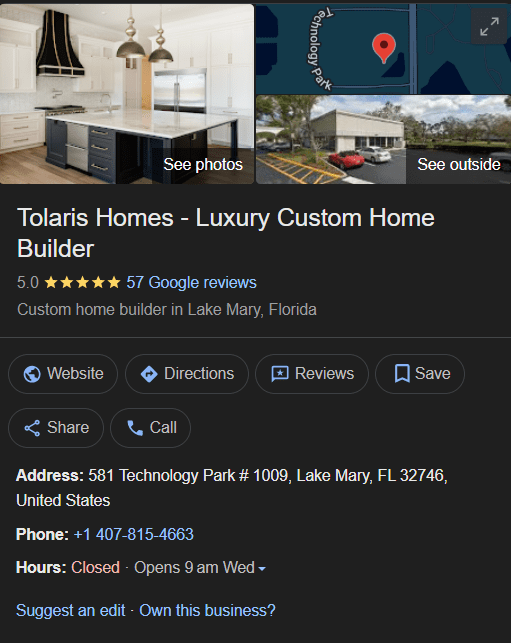
What to focus on:
- Choose the most accurate primary and secondary categories
- Write clear, service-based descriptions
- Keep hours, contact details, and attributes updated
- Upload recent, high-quality photos
- Respond to reviews consistently
- Post updates to show the business is active
This isn’t a one-time setup. Businesses that show ongoing activity tend to build stronger trust signals and that directly impacts how often they appear in AI-driven results.
Tip #2. Local Keyword Research
Keyword research hasn’t disappeared but how it works has changed.
AI doesn’t rely on exact-match keywords the way traditional search did. Instead, it focuses on intent and context.
That means your strategy should reflect how people actually search:
- Full questions
- Location-based needs
- Problem-driven queries
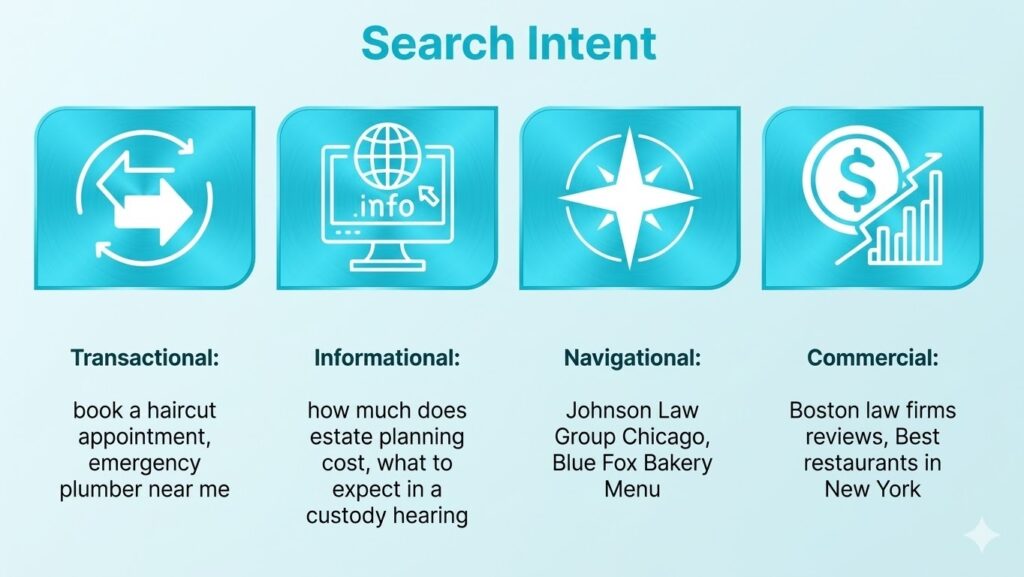
Instead of building pages around isolated keywords, think in terms of topics tied to real customer needs.
For example:
- “Why are my ads not working in [city]”
- “Best HVAC repair near me”
- “Emergency plumber open now”
When your content aligns with real intent, it becomes easier for AI to connect your business to relevant searches.
Tip #3. Data Consistency Across Platforms
One of the fastest ways to lose visibility is inconsistent business information. AI systems compare data across multiple sources. If your business name, address, phone number, hours and services don’t match everywhere, it creates uncertainty.To avoid follow these best practices:
Best practices:
- Standardize your business information across all platforms
- Keep listings updated regularly
- Monitor directories for changes you didn’t make
- Align service descriptions and categories
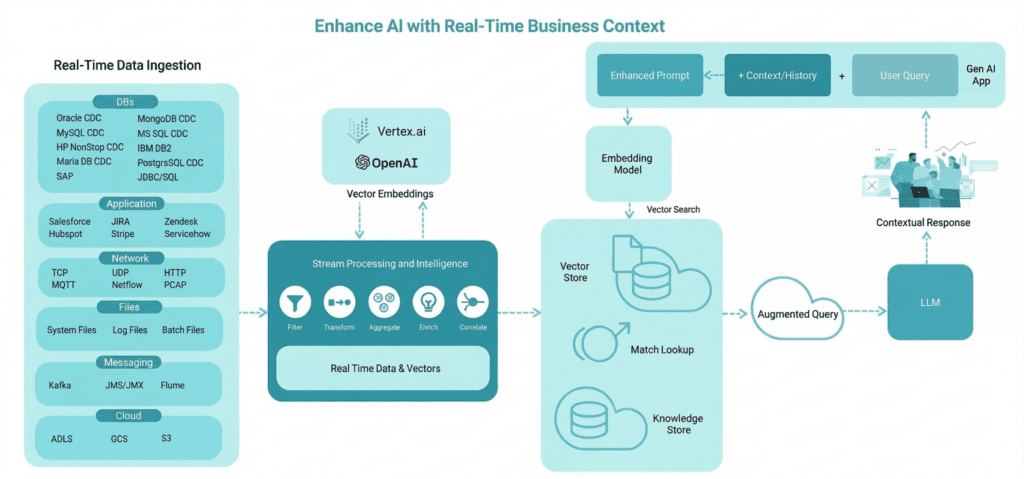
Consistency builds trust. And in AI-driven search, trust determines whether your business gets included or ignored.
Tip #4. Technical SEO Readiness
Technical SEO determines whether search systems can reliably access, interpret, and trust your website.
In AI Mode, this becomes even more important. AI evaluates how clearly your data supports your location, services, and relevance. If your technical foundation is weak, your visibility will be inconsistent, no matter how strong your content or offers are.
Several technical issues commonly prevent local sites from performing well in AI-driven search:
“The most common issues are inconsistent NAP data, weak site architecture, poor crawlability and lack of structured data.
AI-driven search relies heavily on clean, accurate signals, so technical gaps like duplicate location pages, slow page speed, broken internal links or missing schema can limit how well a site is interpreted and surfaced in local AI results,” Josh said.
What this means for your business:
If your site has:
- Multiple versions of the same location page
- Conflicting business information
- Slow load times or mobile issues
- Broken internal linking
Regular audits and maintenance ensure your site stays accessible, fast, and consistent. When these foundations are in place, search systems can interpret your business more accurately and that increases your chances of showing up when it matters.
Tip #5. Structured Data Validation
Structured data is what helps search systems clearly understand your business without guessing.
It organizes key details like your services, location, business type, and customer feedback into a format that AI can process with confidence. Without it, your website relies on interpretation. With it, you provide clarity.
Why this matters in AI-driven search:
AI systems prioritize clean, machine-readable data when deciding which businesses to surface. Structured data removes ambiguity and gives your business a stronger, more reliable signal.
When your schema is properly implemented:
- Your services are easier to match with relevant searches
- Your location and service areas are clearly defined
- Your reviews and credibility signals are reinforced
- Your business becomes easier to compare against competitors
What most businesses get wrong:
- Missing schema entirely
- Outdated or incorrect markup
- Inconsistent data between schema and visible content
- Only implementing basic schema without service-level detail
These gaps make it harder for AI to confidently use your data, even if your business is a strong fit.
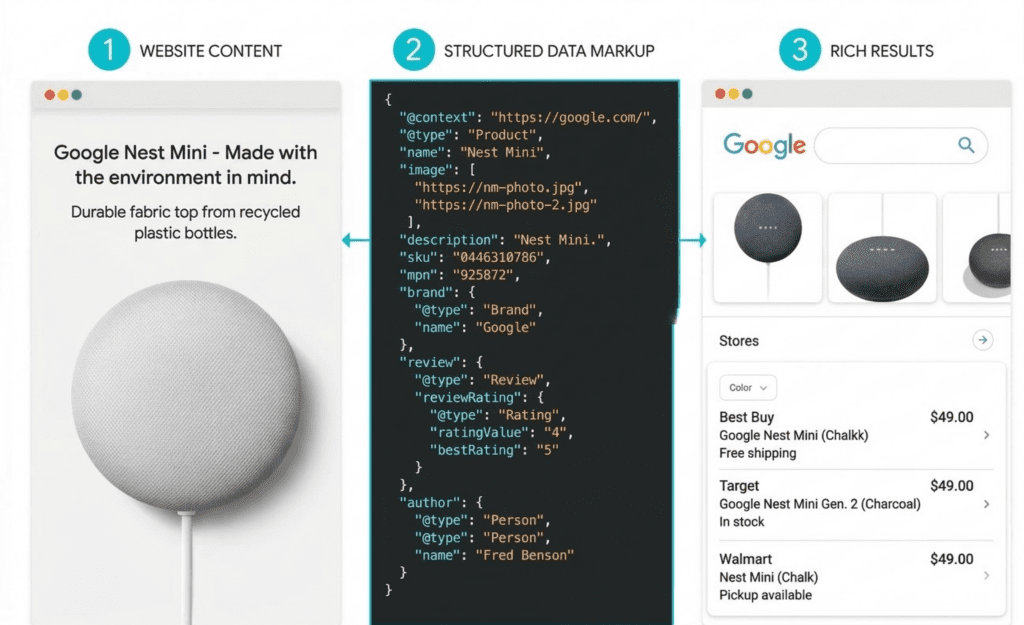
Image source : Hukabuy
The real impact:
When structured data is well-maintained, it helps search systems decide:
- Which version of your business information to trust
- Which services to highlight
- When to include your business in AI-generated results
In competitive local markets, that clarity often becomes the difference between being included or overlooked.
Tip #6. Customer Review Management
Customer reviews influence your visibility in ways that go far beyond star ratings.Search systems analyze the actual content inside reviews to understand:
- What your business is known for
- How customers describe your services
- Whether your experience matches search intent
That context helps determine when your business is relevant enough to be surfaced in AI-driven results.
What this means in practice:
Reviews are data signals.When customers consistently mention specific services, locations, or outcomes, it strengthens your association with those queries. Over time, this builds a clearer picture of your business in search systems.
Your response strategy matters just as much:
- Respond to all negative reviews
- Respond to most positive reviews
- Keep responses professional, clear, and helpful
- Address concerns directly instead of deflecting
Timely responses show that your business is active, accountable, and engaged. They also give you an opportunity to reinforce accurate information when a review is unclear or incomplete.
Platform prioritization:
Not all review platforms carry equal weight.
- Google remains the primary source of trust and visibility
- Facebook and industry-specific platforms provide additional support
- Niche directories can strengthen relevance depending on your market
Focusing your efforts where visibility impact is highest will produce better results than spreading attention too thin.
When review management is consistent, it strengthens both trust and clarity. Over time, this improves how often your business is selected in AI-generated local results.
Tip #7. Local Community Engagement
Your activity in the local community does more than build relationships. It creates signals that search systems use to validate your presence.
When your business is mentioned across trusted local sources, it reinforces your connection to a specific area and audience.
Why this matters:
Search systems look for real-world evidence that your business operates within a location. Community involvement generates that evidence naturally.
The more your business is referenced alongside your city, services, and activities, the easier it becomes for AI to recognize your local relevance.
Practical ways to build these signals:
- Participate in local events, charities, and organizations
- Partner with nearby businesses and community groups
- Earn mentions on local news sites and event pages
- Share your involvement across your own channels
- Keep your online presence aligned with offline activity
What most businesses overlook:
They treat community involvement as branding, not as a visibility driver. In reality, these activities create trusted mentions that help search systems differentiate your business from others offering the same services.
The advantage:
When multiple businesses compete in the same area, those with stronger local signals tend to stand out. Community engagement gives search systems more confidence in your relevance and legitimacy.
Tip #8. Answer-First Content Structure
Answer-first content aligns with how AI systems evaluate and extract information. Search systems prioritize content that provides a clear answer immediately. If your page takes too long to get to the point, it becomes less likely to be used in AI-generated responses.
How to structure your content:
Think in layers:
- Start with a direct, concise answer
- Follow with a clear explanation
- Expand into supporting sections that address related questions
This approach mirrors how users think and how AI assembles responses.
What this means for your site:
- Each page should answer a specific question clearly
- Subheadings should reflect real follow-up questions
- Content should match how customers speak during calls or inquiries
When your content anticipates what users will ask next, it keeps them engaged and makes it easier for AI to connect multiple related queries back to your business.
The advantage:
Short answers establish relevance. Deeper sections build authority. When both are present, your content becomes easier to extract, easier to trust, and more likely to be surfaced in AI-driven results.
Tip #9. Entity Mentions Beyond Your Website
Search systems don’t rely on your website alone to understand your business.They build a profile based on how your business is referenced across the web. These references help define your business as an entity tied to specific services and locations.
Why this matters:
AI connects businesses to:
- Locations
- Services
- Real-world activity
The more consistently your business appears in these contexts, the stronger your identity becomes.
What strengthens entity signals:
- Mentions alongside your city or service area
- Coverage on local news and community sites
- Listings on credible, industry-relevant platforms
- References tied to real events or partnerships
Not all mentions are equal:
Mentions from trusted local sources carry significantly more weight than generic directories.
Stronger sources include:
- Local government or city websites
- News organizations
- Chamber of commerce pages
- Established community platforms
How to earn better mentions:
You don’t need large-scale link-building campaigns. You need reasons to be referenced.
- Share original insights or local data
- Participate in activities worth covering
- Contribute expertise that others can cite
When your business becomes a source of useful, relevant information, mentions happen naturally.Clear and consistent entity associations make it easier for search systems to understand who you are, where you operate, and when to surface your business.
Tip #10. AI-Driven Metrics Monitoring
Traditional rankings no longer reflect the full picture of your visibility.AI-driven search introduces multiple touchpoints where your business can appear, often without a standard ranking position.
What you should be tracking:
- Appearances in AI-generated answers
- Local pack impressions
- Map visibility
- Branded search growth
- Calls, clicks, and conversions
What this means for decision-making:
Visibility is no longer about a single position. It is about how often your business appears across different search experiences.If you only track rankings, you miss how users are actually finding and engaging with your business.
A better approach:
Focus on trends across visibility and engagement:
- Are more people searching for your brand?
- Are you appearing more frequently in local results?
- Are those impressions turning into real inquiries?
These signals provide a clearer view of performance and help you adjust strategy based on what is actually driving results.
Put AI-Driven Local SEO Into Action
AI Mode has changed how your business is evaluated and surfaced in search. Visibility now depends on how clearly your business can be understood across multiple signals, including data consistency, technical structure, content clarity, and entity validation.
Most businesses are still approaching SEO in silos. They fix one area at a time and expect consistent growth. That is where performance breaks down.
At Market Aspex, we help you connect those pieces. We build structured, data-driven SEO systems that turn fragmented visibility into predictable growth.
If your current results feel inconsistent or difficult to measure, it is time to step back and fix the foundation.
Explore how Market Aspex can help you clarify your data and scale with confidence.
Frequently Asked Questions
What role does a local SEO strategy play in AI-driven search?
It ensures your business is clearly defined, consistently represented, and easy for search systems to trust and surface.
How is AI search SEO different from traditional optimization?
Traditional SEO focused on rankings. AI-driven search focuses on selecting the most relevant and reliable answers.
Why are traditional local SEO tactics no longer enough?
Because visibility now depends on multiple signals beyond rankings, including data accuracy, entity strength, and content clarity.
How does a local search marketing strategy support AI-powered discovery?
It aligns your business data, content, and external signals so search systems can confidently match you to relevant queries.
Why is aligning with AI search strategy important?
Because search behavior is shifting toward summarized results, and businesses that adapt early gain a visibility advantage.
How does AI determine which businesses to include in results?
By evaluating consistency, relevance, trust signals, and how clearly your business is connected to a location and service.
Does AI-driven search reduce the importance of having a website?
No. Your website remains a key source of structured, reliable information that supports all other signals.
How often should performance be reviewed?
Regularly. Monthly reviews are a baseline, but high-growth businesses often monitor key signals weekly.
Are AI-generated results replacing traditional listings?
They are not replacing them entirely, but they are becoming a primary layer of visibility.
What is the biggest mistake businesses make?
Focusing only on rankings instead of improving data clarity, consistency, and overall trust signals.
How does AI search impact customer decision-making?
It shortens the decision process by presenting fewer, more trusted options upfront.
What should businesses prioritize first?
Start with Google Business Profile, data consistency, and technical readiness.
What risks come with ignoring AI-driven SEO?
Reduced visibility, fewer qualified leads, and falling behind competitors who adapt faster.
How are success metrics changing?
Success is measured by visibility across search experiences and actual engagement, not just rankings.
How does AI SEO support future search changes?
It builds a foundation based on clarity and trust, which remains consistent even as search evolves.