
Key Takeaways
- Amazon logistics issues directly impact revenue, not just fulfillment.
- Delivery delays reduce conversions and increase cancellations.
- Returns and LPN processing quietly erode margins.
- Fulfillment problems weaken brand trust and repeat purchases.
- Most sellers miss the full impact due to disconnected data.
- Sustainable growth requires alignment between visibility and logistics.
Most Amazon sellers think of logistics as an operational detail. Something Amazon handles in the background while you focus on ads, listings, and growth.
That assumption quietly costs brands money.
Delivery delays, stalled tracking updates, and high return volumes are not just fulfillment inconveniences. They directly affect conversion rates, margins, repeat purchases, and long-term brand value. When logistics performance slips, revenue leaks often follow long before dashboards make it obvious.
Need clarity on your marketing data?
See how Market Aspex helps brands scale smarter.
Learn More → Explore all services →At Market Aspex, we’ve seen this pattern repeatedly. Sellers optimize traffic and spend aggressively, only to wonder why revenue feels harder to scale than it should.
The missing piece is usually not marketing. It’s logistics.
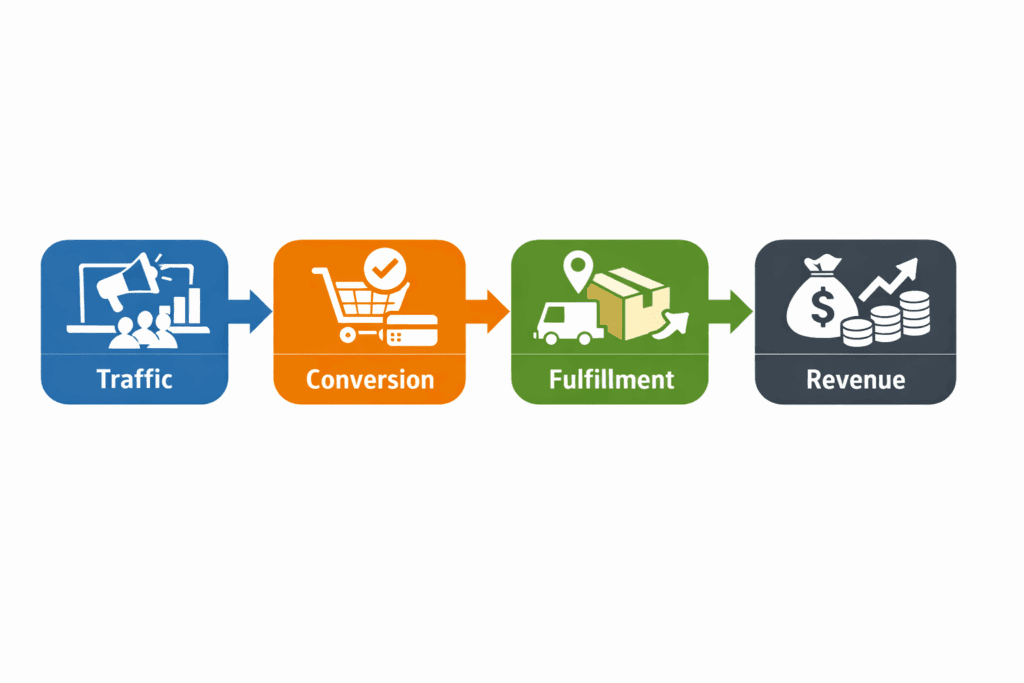
Amazon Logistics Is Part of Your Revenue System
Amazon controls fulfillment through programs like Fulfillment by Amazon (FBA), regional distribution centers, and third-party carrier networks. But while Amazon manages delivery execution, sellers absorb the financial impact when things go wrong.
From a buyer’s perspective, logistics is part of the product experience. Delivery speed, reliability, and return handling all influence trust and purchase behavior.
If fulfillment performance degrades, the revenue system feels it first.
How Do Amazon Delivery Delays Affect Conversion Rates?
Delivery delays introduce uncertainty at the exact moment buyers decide whether to complete a purchase.
Research consistently shows that fulfillment reliability is a key driver of customer loyalty and conversion. Nearly 19 percent of consumers stop shopping with a retailer after just one delivery issue, and 42 percent say their loyalty depends on how delivery delays are handled. That makes logistics performance a direct revenue lever, not an operational footnote.
On Amazon, this uncertainty often appears through messages like package delayed in transit. Even short delays can lead to:
- Checkout hesitation
- Order cancellations
- Increased customer support volume
- Lower review sentiment
Amazon’s customer experience guidelines prioritize predictability over speed. Buyers are willing to wait when expectations are clear. What hurts conversion is uncertainty.
This is why sellers often see sales dips even when traffic remains stable. We break this down further in our detailed guide on Amazon package delayed in transit scenarios.
Why Returns and LPN Labels Quietly Erode Margins
Returns are frequently treated as a cost of doing business. In practice, they are a compounding margin problem.
Industry data shows Amazon return rates generally fall between 5 and 15 percent, with higher rates in categories like apparel and consumer electronics. Across eCommerce more broadly, return rates can climb as high as 30 to 40 percent during peak seasons.
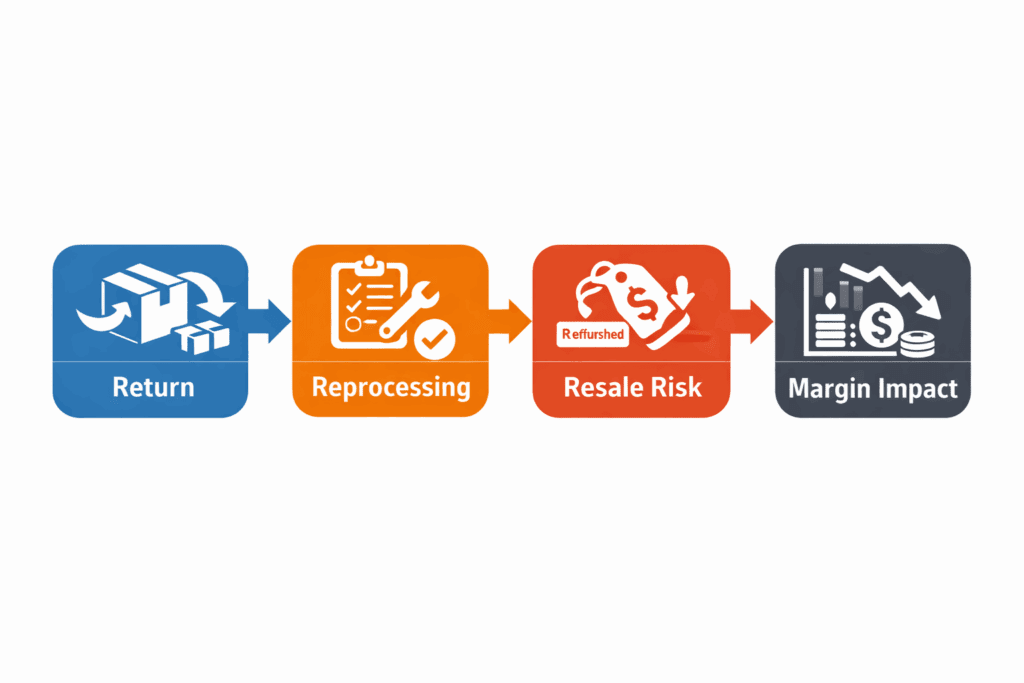
Within Amazon’s fulfillment network, returned items are inspected and often reprocessed. Many receive LPN (License Plate Number) labels, which Amazon uses internally to track returned or reconditioned inventory.
While an LPN label does not automatically mean an item is unsellable, it introduces real financial friction:
- Additional fulfillment and handling fees
- Delays before inventory can be resold
- Risk of resale as used or refurbished
- Higher likelihood of future returns
Each return slows inventory velocity and erodes margin. Over time, this becomes difficult to offset through pricing or advertising alone.
Brand Trust Takes Longer to Recover Than Sales
Revenue loss from logistics issues shows up quickly. Brand damage does not.
Buyers rarely separate fulfillment performance from the brand experience. Even when Amazon controls delivery, customers associate delays and returns with the seller. Over time, repeated friction leads to:
- Lower repeat purchase rates
- Reduced brand search demand
- Hesitation on higher-value orders
Brand trust influences more than reviews. It affects click-through rates, conversion efficiency, and long-term customer lifetime value. Once trust erodes, rebuilding it takes significantly longer than resolving a single logistics issue.
This is where fulfillment performance starts to influence organic growth.
Why Most Sellers Miss the Full Revenue Impact
The challenge is not awareness. It’s visibility.
Logistics data lives inside Amazon dashboards. Marketing data lives elsewhere. Conversion and revenue reporting rarely connect the two.
As a result:
- Teams react to symptoms instead of root causes
- Ad spend increases to compensate for lost conversions
Without a connected view, logistics issues feel isolated. In reality, they ripple across the entire growth system.
Connecting Logistics, Visibility, and Growth Performance
Sustainable growth depends on alignment.
SEO, paid acquisition, and brand demand only compound when the post-click experience supports them. Driving traffic into a system strained by delivery delays or return inefficiencies creates diminishing returns.
This is why high-performing brands evaluate logistics performance alongside visibility and conversion metrics. Growth becomes more predictable when fulfillment reliability supports demand capture.
This same principle underpins white hat SEO services built for sustainable growth, where visibility is designed to compound only when downstream systems can support the customer experience.
What High-Performing Amazon Brands Do Differently
Strong operators do not chase isolated fixes. They build clarity.
High-performing Amazon brands consistently:
- Monitor conversion changes following delivery disruptions
- Track return-related margin impact alongside marketing metrics
- Evaluate brand demand trends, not just session volume
- Invest in systems that connect data across functions
This allows leadership teams to make informed decisions about forecasting, spend allocation, and growth strategy instead of reacting to surface-level fluctuations.
Are Amazon Logistics Issues Just Operational Problems?
No. They are growth signals.
Amazon logistics issues reveal how resilient or fragile a revenue system really is. Brands that understand this connection protect margins, sustain trust, and scale more predictably over time.
Those that ignore it often overcorrect in marketing, underinvest in systems, and struggle to explain why growth feels inconsistent.
Clarity is the difference.
Final Thought
Amazon logistics performance is not separate from seller success. It influences conversion, margin, and long-term brand value more than most teams realize.
When logistics, visibility, and revenue are viewed together, better decisions follow.
That’s how growth becomes predictable.
👉 Learn more about how Market Aspex helps brands connect visibility, data, and growth systems to scale with confidence.
FAQs
How do Amazon logistics issues affect seller revenue?
Amazon logistics issues impact revenue by reducing conversion rates, increasing cancellations, driving higher return costs, and weakening repeat purchase behavior. Even when traffic remains stable, fulfillment problems can quietly erode margins and long-term growth.
Do Amazon delivery delays really hurt conversions?
Yes. Delivery delays introduce uncertainty at checkout, which often leads to hesitation, abandoned carts, and order cancellations. Buyers are more sensitive to unpredictability than speed, making reliable delivery a key factor in conversion performance.
How do returns and LPN labels affect profitability?
Returns reduce margin through added handling fees, slower inventory turnover, and resale risk. Items processed with LPN labels may face delays, be resold as used, or experience higher return likelihood, compounding margin pressure over time.
Why do logistics issues impact brand trust on Amazon?
Buyers associate fulfillment performance with the brand, even when Amazon controls delivery. Repeated delays or return friction reduce confidence, leading to fewer repeat purchases, weaker brand demand, and lower lifetime value.
Why don’t most sellers see the full impact of logistics problems?
Logistics data, marketing performance, and revenue metrics typically live in separate systems. Without connecting these signals, sellers often respond to surface-level symptoms like declining conversions instead of addressing fulfillment-related root causes.
Are Amazon logistics issues just operational problems?
No. Logistics issues act as early indicators of revenue system weakness. They influence conversion efficiency, margin stability, and brand durability, making them a strategic growth concern rather than a back-end operational detail.
How can sellers reduce the revenue impact of logistics issues?
High-performing sellers monitor fulfillment performance alongside conversion and margin metrics, track return-related costs in context, and align logistics visibility with growth strategy. Connecting these systems allows teams to make clearer, more predictable decisions.