Key Takeaways
- Welcome email drip campaigns are one of the highest ROI automations in both eCommerce and B2B marketing.
- The first email should deliver immediate value, not a hard sell.
- Clear positioning early in the sequence reduces friction later in the funnel.
- Social proof builds confidence and accelerates conversion decisions.
- Incentives perform best when introduced after trust is established.
- Automation without personalization underperforms. Intent-based relevance is what drives results.
- Welcome sequences should evolve as your audience, data, and offers mature.
When someone joins your email list, whether they downloaded a guide, subscribed to your newsletter, or completed their first purchase, they are signaling intent.
They are interested.
Your welcome email drip campaign determines whether that interest turns into trust, engagement, and revenue, or fades into inbox noise.
High-performing welcome sequences do not rely on aggressive sales tactics. They educate, guide, and build confidence in the brand before asking for a conversion.
Below are the five foundational elements behind welcome email campaigns that consistently outperform.
1. Provide Immediate Value Without Selling Too Soon
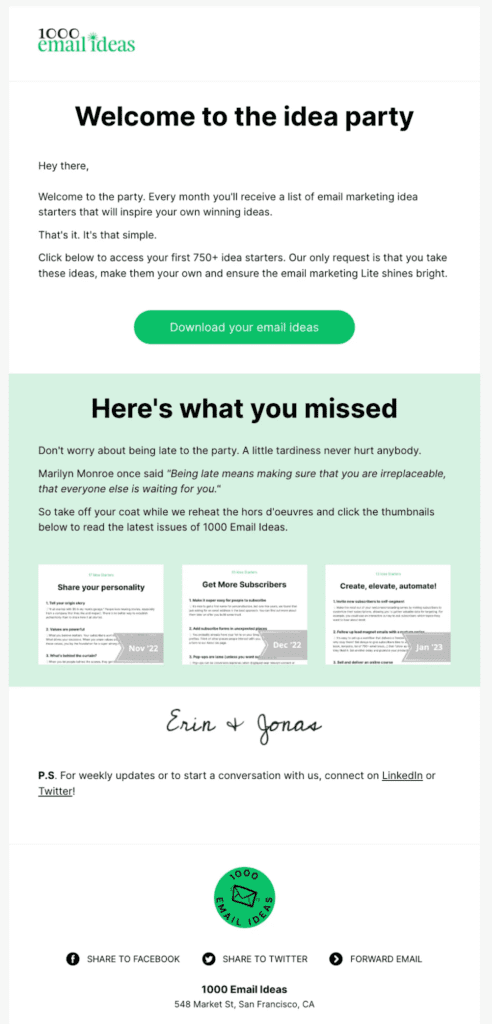
The first email sets expectations. It should confirm the subscriber made the right decision and give them something useful right away.
Effective first emails include:
- A clear welcome message
- What the subscriber can expect going forward
- Immediate access to a resource, guide, or insight
- A low-commitment CTA such as learning more or exploring
According to industry benchmarks, welcome emails generate 4x higher open rates and up to 5x higher click rates compared to standard promotional emails. That attention should be used to build value, not push a sale.
Early value reduces unsubscribe rates and increases long-term engagement.
2. Clearly Explain What Makes Your Brand Different
New subscribers need clarity quickly. They want to understand who you are, what problem you solve, and why they should keep paying attention.
Your welcome sequence should communicate:
- Your mission and positioning
- The specific problem you solve
- Who your solution is built for
- Your primary products or services
This is not about storytelling for its own sake. Brands that clearly position themselves early reduce friction and improve conversion rates later in the funnel.
Design guidance:
Simple layouts with clear hierarchy outperform cluttered promotional designs. Clarity converts better than creativity alone.
3. Use Social Proof to Reduce Buyer Uncertainty
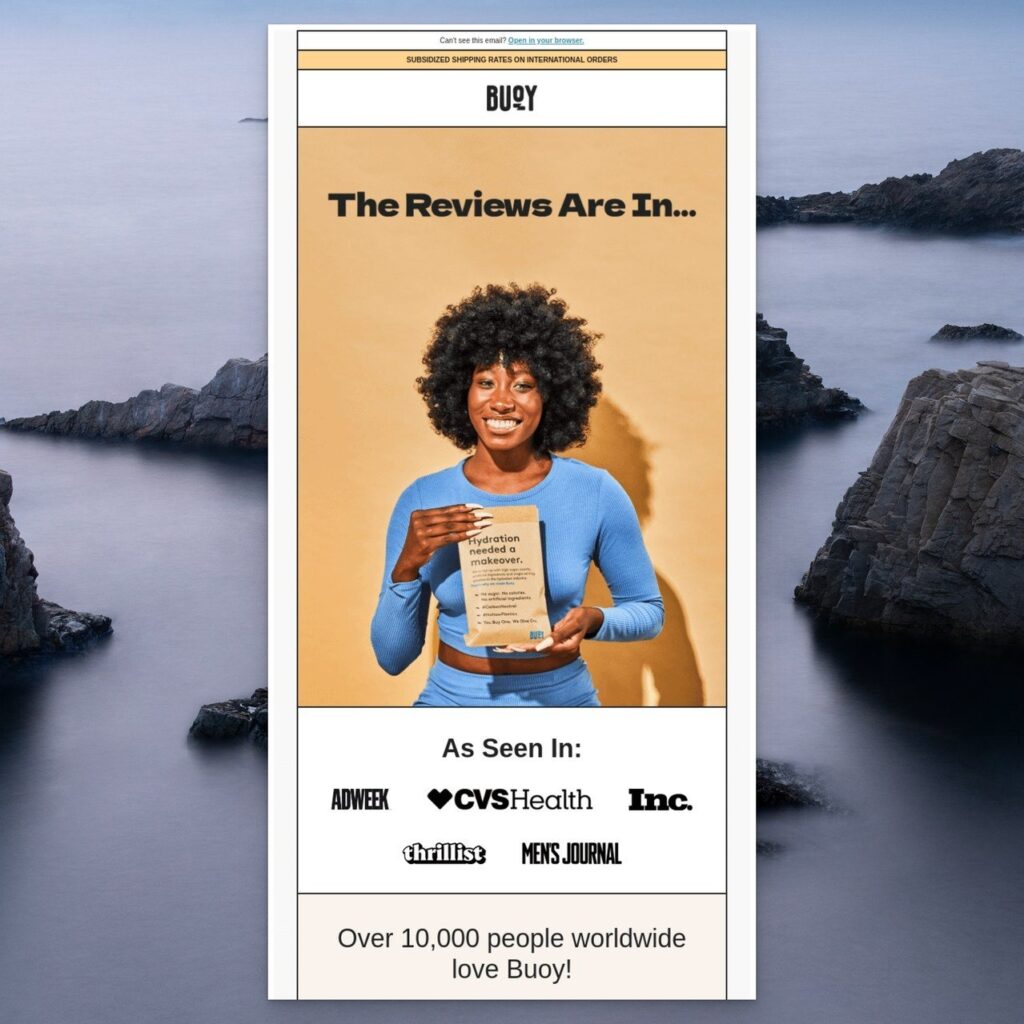
Most new subscribers are still evaluating risk. Social proof shortens that decision cycle.
Effective social proof includes:
- Customer testimonials
- User-generated product images
- Before and after results for B2B or eCommerce
- Certifications, awards, or recognizable partners
Data insight:
Studies consistently show that over 90 percent of consumers read reviews before purchasing, and B2B buyers behave similarly when evaluating services. Social validation builds confidence before price or offers enter the conversation.
4. Introduce Incentives Strategically
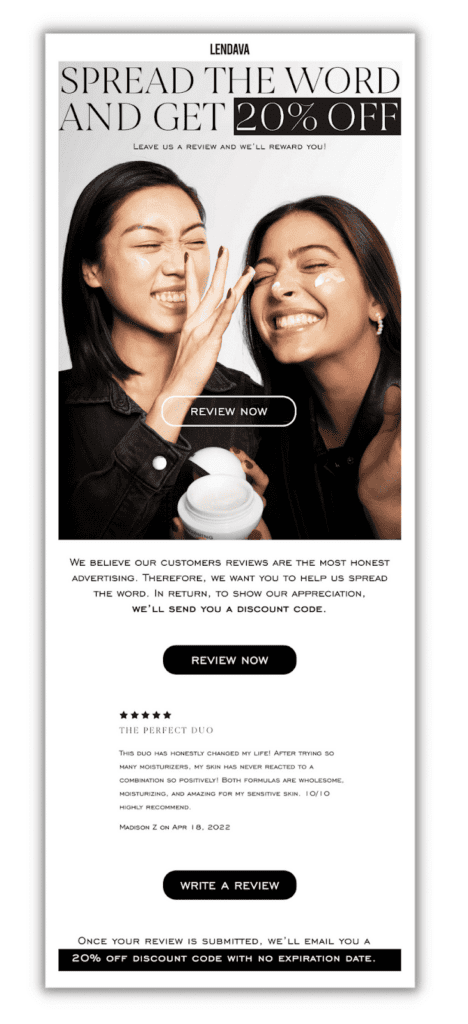
Welcome sequences convert well, but leading with discounts often weakens perceived value.
Smart welcome offers include:
- First-purchase incentives for eCommerce
- Free audits or strategy calls for B2B
- Subscriber-only access or benefits
- Personalized recommendations based on intent
Best practice:
Save your strongest offer for Email 3 or 4. By that point, the subscriber understands the brand, the problem, and the value. The incentive feels earned, not forced.Brands that delay the primary offer until after trust-building emails often see higher conversion quality and lower refund or churn rates.
5. Automate and Personalize Based on Intent
Generic welcome sequences underperform. Modern subscribers expect relevance from the first interaction.
High-impact personalization includes:
- Natural use of the subscriber’s name
- Content or product recommendations based on behavior
- Segmentation by:
- Industry for B2B
- Interests or browsing behavior for eCommerce
- Signup source such as content, landing page, or event
- Industry for B2B
Automation ensures consistency. Personalization increases engagement. Together, they drive scalable results without adding manual workload.
What a High-Performing 3 to 5 Email Welcome Sequence Looks Like
| Purpose | Primary CTA | |
| 1 | Welcome and immediate value | Visit site or access resource |
| 2 | Brand positioning and social proof | Explore products or services |
| 3 | Problem awareness and solution | Learn more or request information |
| 4 | Exclusive incentive | Shop now or schedule a call |
| 5 | Case study or best performers | Talk to sales or add to cart |
Track Performance and Optimize Regularly
Welcome sequences should never be set and forgotten.
Key metrics to monitor:
- Open rate to evaluate subject line relevance
- Click-through rate to assess content value
- Revenue or lead conversion rate to confirm alignment with intent
Welcome flows often represent some of the highest ROI automation in email marketing. Continuous optimization compounds results.
Turn New Subscribers Into Long-Term Revenue
A strong welcome email drip campaign does more than generate early conversions. It establishes trust, sets expectations, and increases customer lifetime value.
If you want help building a welcome sequence that:
- Aligns messaging with real business data
- Builds trust before pushing conversion
- Scales cleanly as your brand grows
Market Aspex can help.
Explore how Market Aspex can help you clarify your data and scale with confidence.
Frequently Asked Questions
What is a welcome email drip campaign?
A welcome email drip campaign is a short automated email sequence sent to new subscribers or customers immediately after signup. Its purpose is to build trust, set expectations, and guide users toward a meaningful next step such as a purchase, demo, or consultation.
How many emails should a welcome sequence include?
Most high-performing welcome sequences include 3 to 5 emails. Fewer emails risk under-educating the subscriber, while longer sequences can dilute intent. The ideal length depends on your sales cycle and audience maturity.
Should welcome emails focus on selling or education?
Education should come first. Welcome sequences that prioritize clarity, value, and relevance outperform those that lead with promotions. Offers convert best after trust and positioning are established.
Are welcome email campaigns effective for B2B companies?
Yes. In B2B, welcome sequences are especially effective for:
- Qualifying leads
- Establishing authority
- Routing high-intent prospects to sales
- Shortening the sales cycle
B2B welcome emails often outperform standard newsletters in both engagement and lead quality.
How do I personalize a welcome email without overcomplicating it?
Start with intent-based signals such as:
- Where the subscriber signed up
- What content they accessed
- What product or service they showed interest in
Even light segmentation based on intent significantly improves relevance and performance without requiring complex setup.
What metrics should I track for welcome email performance?
The most important metrics include:
- Open rate to measure subject line and relevance
- Click-through rate to assess content value
- Revenue or lead conversion rate to confirm alignment with intent
Welcome flows should be reviewed and optimized regularly, not treated as set-and-forget automation.