Ever wonder how Amazon keeps track of all the stuff they sell, especially when someone returns an item? Well, they have a little trick up their sleeve: LPN Labels. These tiny labels help Amazon know exactly what’s what when products get sent back to them.
Let’s break it down in a simple way, kind of like solving a mystery!
What Is an Amazon LPN Label or Barcode?
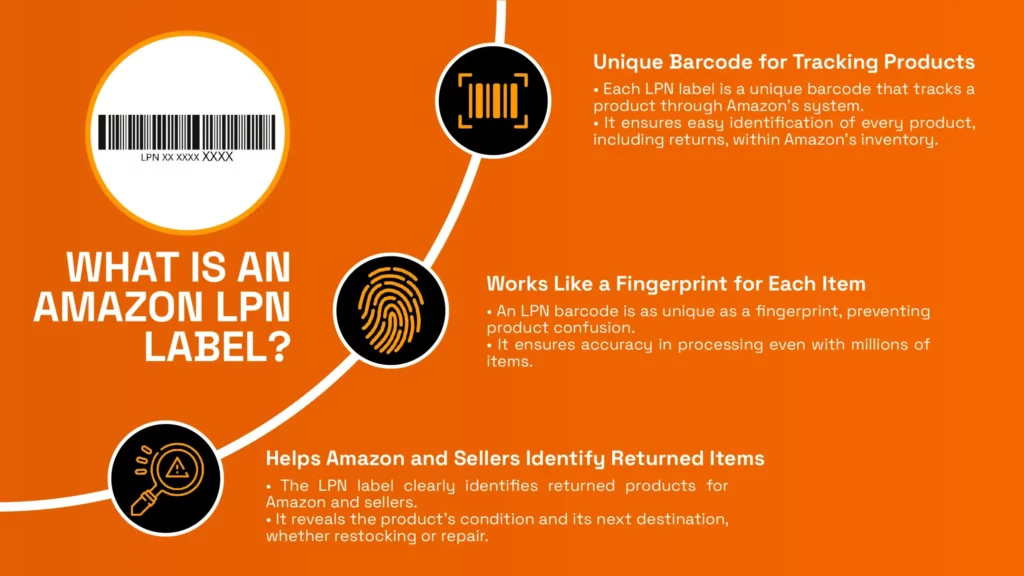
An Amazon LPN label (License Plate Number) is a unique barcode that Amazon uses to track individual items, especially when they are returned. Think of it as a fingerprint for products, helping Amazon and sellers identify exactly which item is being processed, where it’s going, and what condition it’s in. The LPN barcode is essential for keeping things organized in Amazon’s massive warehouses and for ensuring that returned items are handled correctly. Now, let’s break it down in a fun way!
Need clarity on your marketing data?
See how Market Aspex helps brands scale smarter.
Learn More → Explore all services →How Can the Amazon LPN Number Help a Seller Identify Amazon Returns?
The Amazon LPN number is like a name tag for each product. Imagine you run an online store and someone returns a package. How do you know what’s inside? Well, the Amazon LPN label makes it super easy! It lets sellers quickly figure out exactly what’s being returned. Whether it’s a book, a toy, or some funky socks, the LPN barcode on Amazon items helps sellers know what to do with the returned product, whether to resell it, repair it, or toss it.
Why Does Amazon Use an LPN Sticker?
Amazon is all about speed and accuracy. With millions of items flying around in warehouses, things could get messy. That’s why Amazon slaps an LPN sticker on items, especially when they are returned. The LPN label on Amazon makes sure each product stays in its proper place and doesn’t get mixed up with other stuff.
For example, let’s say someone returns a t-shirt, but the package gets jumbled up with electronics. The Amazon LPN barcode makes sure Amazon employees don’t mix the t-shirt with a phone charger! It’s a little code that says, “Hey, this is me!” to the warehouse robots and workers.
What Does the Amazon LPN Sticker Look Like?
An Amazon LPN sticker is pretty plain, it’s just a small white or yellow label with black text. You’ll see the letters “LPN” followed by a bunch of numbers and letters. It might look boring, but it’s like a superhero in disguise, keeping everything organized! So next time you see an Amazon LPN label, know it’s there to make sure things don’t go haywire in the warehouse.
How Does the Amazon LPN Number Work?
The LPN number on Amazon products works like a secret code. When an item moves around the warehouse, Amazon’s system generates a unique LPN number for it. Every time the item is scanned, the system knows where it is and what’s happening with it.
For example, you return a book to Amazon. They stick an LPN barcode on it, and that number follows the book everywhere it goes, through the warehouse, into storage, or back to the seller. It’s like leaving a digital trail that helps Amazon track the item’s journey, making sure nothing gets lost!
How Do I Find the LPN Number Sticker?
If you return something to Amazon, you might notice a little sticker with an LPN number on the product or its packaging. It’s usually placed in an easy-to-scan spot so the warehouse robots and workers can keep track of the item. Look closely at the box or bag, and you’ll probably spot the Amazon LPN sticker there!
How Can I Find the LPN Number in My Return Reports?
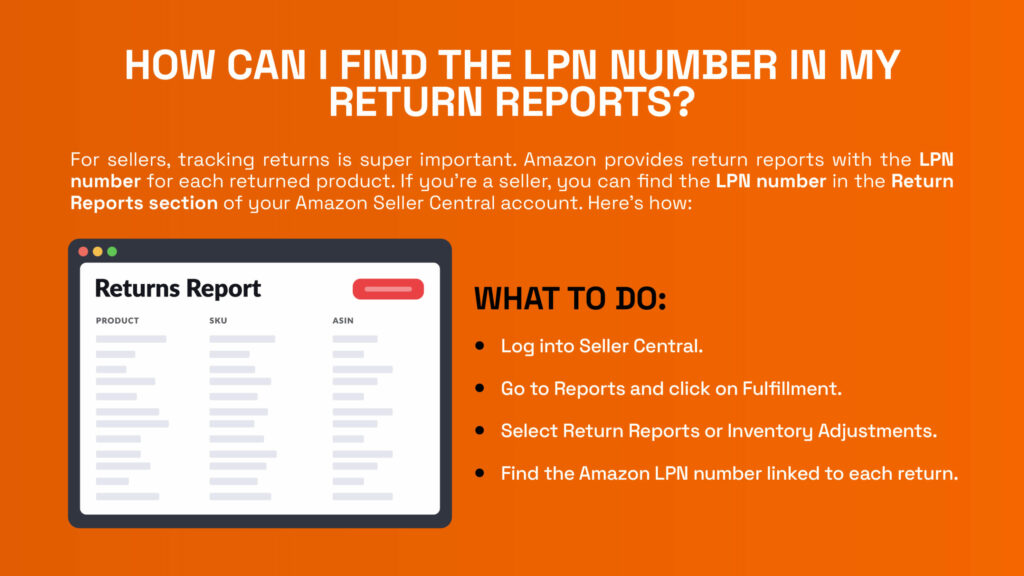
For sellers, tracking returns is super important. Amazon provides return reports with the LPN number for each returned product. If you’re a seller, you can find the LPN number in the Return Reports section of your Amazon Seller Central account. Here’s how:
- Log in to Seller Central
- Go to Reports and click on Fulfillment.
- Select Return Reports or Inventory Adjustments
- Find the Amazon LPN number linked to each return.
These reports help sellers keep track of returned items and figure out if they’re ready to be resold or need to be fixed. It’s like using a checklist to make sure everything is in order.
Why Are Amazon LPN Return Labels Important?
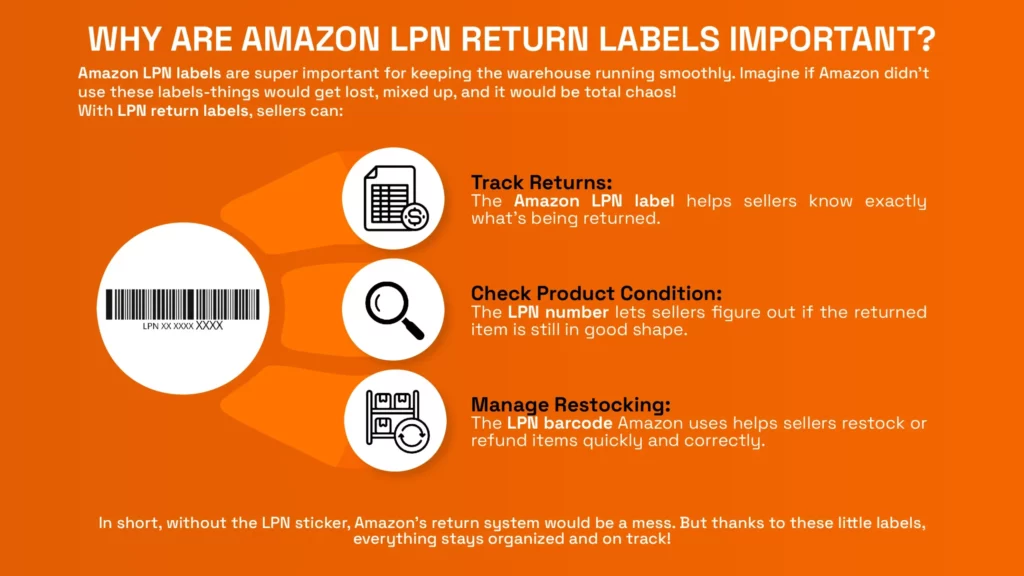
Amazon LPN labels are super important for keeping the warehouse running smoothly. Imagine if Amazon didn’t use these labels, things would get lost, mixed up, and it would be chaos! With LPN return labels, sellers can:
- Track Returns: The Amazon LPN label helps sellers know exactly what’s being returned.
- Check Product Condition: The LPN number lets sellers figure out if the returned item is still in good shape.
- Manage Restocking: The LPN barcode Amazon uses helps sellers restock or refund items quickly and correctly.
In short, without the LPN sticker, Amazon’s return system would be a mess. But thanks to these little labels, everything stays organized and on track!
Why Amazon Return Data Becomes a Blind Spot for Scaling Brands
For early-stage sellers, LPN labels and returns often feel like an isolated Amazon issue. Something to explain, work around, or escalate to support.
But for scaling brands, return data becomes something far more dangerous: a blind spot.
When LPN labels appear frequently, they are not just signals of individual returns. They point to deeper issues across:
- Inventory handling and fulfillment patterns
- Product listing clarity and expectation gaps
- Customer experience friction that inflates refunds
- Hidden revenue loss that never shows up in ad dashboards
The problem is that Amazon surfaces these issues in fragments. Case logs, return reasons, account health alerts. None of them connect directly to traffic quality, demand signals, or true revenue impact.
This is where most brands stall.
They know what is happening, but not why it is happening repeatedly, or how returns are quietly distorting performance metrics like ROAS, conversion rate, and lifetime value.
At scale, return behavior is not a support issue. It is a data intelligence problem.
Brands that win on Amazon do not just reduce returns.
They connect return patterns to demand quality, search behavior, and downstream revenue outcomes, then act on that insight.
That is the difference between reacting to Amazon issues and operating with control.
Brands scaling on Amazon need visibility into return drivers, not just explanations.
We help operators connect platform data to revenue impact so decisions are driven by clarity, not guesswork.
👉 Explore how Market Aspex can help you clarify your data and scale with confidence.
How to Reduce LPN-Related Issues on Amazon
While LPN labels are part of Amazon’s internal return process, sellers are not powerless. Brands that see recurring LPN issues typically share one thing in common: preventable friction earlier in the customer journey.
To reduce the frequency and impact of LPN-labeled returns, sellers should focus on:
- Product listing accuracy
Ensure titles, bullet points, images, and variations match exactly what the customer receives. Mismatches between expectation and reality are one of the most common drivers of returns. - Clear condition signaling
New, refurbished, open-box, or used conditions must be unmistakable. Ambiguity here increases inspection returns that trigger relabeling. - Packaging consistency
Products that arrive damaged or appear tampered with are more likely to be returned and relabeled. Consistent, protective packaging reduces unnecessary inspections. - Return reason monitoring
Patterns matter more than individual returns. Repeated reasons like “not as described” or “wrong item sent” often precede higher LPN activity.
Reducing LPN labels starts long before a product is returned. It starts with controlling expectation, fulfillment, and feedback loops.
What Sellers Can Do Operationally
Operationally mature sellers treat LPN labels as signals, not surprises.
Instead of reacting to individual cases, they focus on system-level controls:
- Audit return data regularly
Look beyond surface-level metrics. Track return reasons by SKU, fulfillment method, and traffic source to identify trends early. - Align fulfillment and inventory workflows
Inventory that changes hands frequently between warehouses, prep centers, or fulfillment methods is more prone to relabeling during inspections. - Document product changes
Even small changes to materials, packaging, or suppliers can increase returns if listings are not updated immediately. - Connect returns to performance metrics
Returns affect more than inventory. They distort conversion rates, advertising efficiency, and customer lifetime value when left unaccounted for.
At scale, operational discipline is not about fixing one issue at a time. It is about building visibility across the entire demand-to-delivery cycle.
Final Thoughts
So, what’s the deal with Amazon’s LPN labels? They’re tiny but mighty! These little stickers make sure that everything in Amazon’s warehouses stays organized, even when things get returned. Whether you’re a seller or a shopper, the LPN barcode is working behind the scenes to keep things running smoothly.
Next time you return something to Amazon, give a nod to the Amazon LPN sticker; it’s doing all the hard work, so you don’t have to.
FAQs and Next Steps
Do LPN labels mean my account is at risk?
Not necessarily. Occasional LPN labels are normal. Risk increases when they appear frequently or alongside other account health warnings.
Can sellers remove LPN labels themselves?
No. LPN labels are assigned and managed internally by Amazon. Sellers can only reduce the conditions that trigger them.
Do LPN labels affect inventory accuracy?
They can. Relabeled items may be separated from original inventory, which can complicate tracking and reconciliation.
What should I do if LPN labels keep appearing?
Recurring LPN activity is a sign to step back and evaluate listings, fulfillment workflows, and return data holistically rather than treating each case individually.